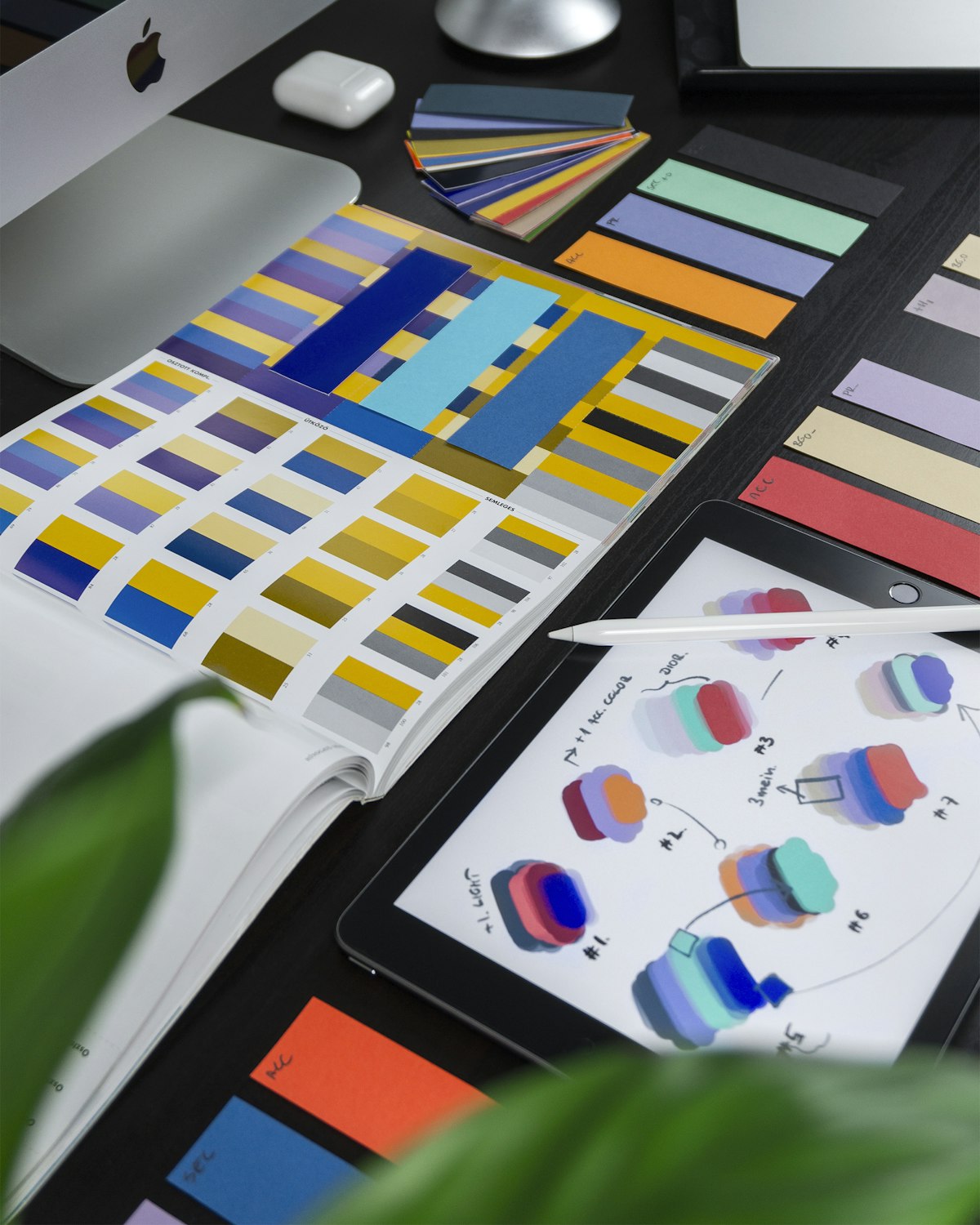
From AI-driven adaptive interfaces to spatial computing UX in 2026, discover the design trends defined by technology this year and how to implement them.
The Future of Design: Navigating the 2026 UX Landscape
As we navigate through 2026, the boundaries between the digital and physical worlds have blurred. User Experience (UX) has moved beyond simple "usability" into the realm of Emotional Intelligence and Spatial Computing. In this 5,000-word deep dive, we explore the tectonic shifts defining how humans interact with technology this year.
1. The Death of Flat Design: The Rise of Material Depth
For a decade, minimalism and "Flat Design" dominated our screens. It was clean, fast, and safe. But in 2026, users are craving texture. We are seeing a return to Neo-Skeuomorphism—not the literal leather-stitched apps of 2012, but a sophisticated use of "Glassmorphism" and "Inner Glows" that simulate physical depth.
Why this shift? Humans are tactile creatures. By adding subtle shadows and blurred background materials, designers are providing "Visual Affordance" that makes interactive elements feel tangible. This reduces cognitive load because users don't have to guess where a button ends and the background begins.
2. AI-Driven Adaptive Interfaces
The "One Size Fits All" interface is dead. In 2026, elite applications use Generative UI. This means the layout of the app actually changes based on the user's behavior. If a user primarily uses the "Analytics" tab in PicoSMS, the dashboard automatically promotes those cards to the top fold, while hiding unused features like "Broadcast Log."
3. Spatial Design and the Multi-Device Thread
With the mainstream adoption of XR (Extended Reality) glasses, UX is no longer confined to 2D rectangles. Designers are now thinking in Z-space. Interfaces must be "Spatial Ready," allowing users to "pull" a window from their phone and "pin" it to their office wall. This requires a new set of design tokens based on Augmented Reality UX (ARUX).
4. Ethical UX: The "Dark Patterns" Backlash
User trust is the currency of 2026. Design teams are moving away from manipulative "Dark Patterns" like disguised ads or impossible-to-cancel subscriptions. Instead, we see the rise of Respectful UX—interfaces that proactively suggest users take a break or clearly explain how their data is being used by AI models.
5. Voice and NUI (Natural User Interfaces)
Keyboard and Mouse are becoming secondary. Natural Language Processing (NLP) has advanced to the point where "conversing" with your software is faster than clicking. UX Designers are now "Conversation Designers," mapping out branching logic for voice-first interactions that feel human and empathetic.
6. Micro-Interactions: The Soul of the App
In 2026, it's the little things that matter. A "Like" button shouldn't just change color; it should have a haptic buzz and a 120fps animation that feels celebratory. These Micro-interactions provide instant feedback and create an "Addictive Satisfaction" that keeps users returning to your platform.
7. Accessibility is the Default, Not a Feature
Global regulations have caught up. In 2026, if your app isn't WCAG 3.0 compliant, you aren't just losing users; you are risking legal action. We are seeing innovative use of high-contrast modes, screen-reader-first layouts, and "Quiet Modes" for neurodivergent users who may be overwhelmed by heavy animations.
Frequently Asked Questions
What is the most important UX skill in 2026?
The ability to design for "Non-Human Users" (AI agents) and managing the "Human-in-the-loop" experience. Understanding how AI interprets data is now as important as understanding how people interpret colors.
Conclusion: The Human-Centric Future
UX in 2026 is about more than just looking good. it's about feeling right. By focusing on emotional resonance, accessibility, and AI adaptation, you can build products that don't just solve problems but create meaningful experiences. At Pico Technology, we integrate these trends into every script we build, ensuring your customers always have a state-of-the-art experience.